










Tiny Billiard
Your roadmap from first tap to flawless trick‑shot champion.
1. Game Background & Introduction
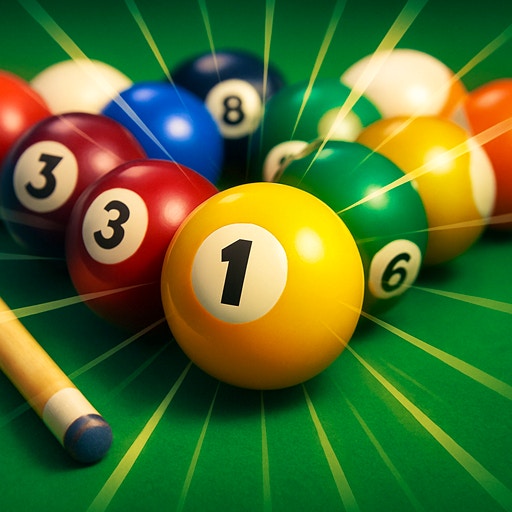
Tiny Billiard takes the classic feel of a pool hall and shrinks it down to a pocket‑sized arena that fits perfectly on a mobile screen. The core idea is simple: one tap, one precise strike, and the cue ball rolls toward the target ball. Yet, beneath that simplicity lies a deep strategic layer that rewards careful planning, precise cue‑ball control, and a willingness to experiment with unconventional shots.
- One‑Tap Precision – The entire game is built around a single‑tap mechanic. Drag to set the cue’s direction, tap to set power, and release. No complex gestures, just timing and aim.
- Mini Table, Big Challenge – The reduced table size means angles close‑off the cushions behave differently from a full‑size table, opening the door for creative trick shots.
- Easy to Learn, Hard to Master – New players can pocket a ball within a few minutes, but mastering stop, follow, draw, and two‑way shots takes practice and strategic thinking.
The game is perfect for casual sessions and for players who love to refine their technique over many matches.
2. Gameplay Mechanics
2.1 Core Controls
Aim
- How to Perform: Drag the cue stick from the cue ball outward. A faint line shows the intended path
- Effect: Sets the direction of the cue ball
Set Power
- How to Perform: Tap once to start the power meter, tap again to lock in the desired strength
- Effect: Determines how far the cue ball travels and how much spin is transferred
Cue‑Ball Spin
- How to Perform: After setting power, a small icon appears for Stop, Follow, or Draw. Tap the icon to select the spin type
- Effect: Alters the cue ball's behavior after contact (stops dead, follows forward, or draws backward)
2.2 Ball Types & Scoring
- Object Balls – Colored balls worth a fixed number of points (usually 1‑3). Pocketing them adds to your total score for the current rack.
- 8‑Ball – The final, high‑value ball. Pocketing it ends the rack, but only after all your designated object balls are cleared. A missed 8‑ball or a foul ends the game instantly.
2.3 Turn Structure
- Assess the Layout – Look for the easiest legal shot, potential safety positions, and any chance for a two‑way shot.
- Choose Spin – Decide whether you need the cue ball to stop, follow, or draw based on the next shot you anticipate.
- Execute – Aim, set power, select spin, and tap.
- Result – If you pocket a ball, you continue. If you miss or commit a foul, the opponent gains control.
2.4 Fouls & Penalties
- Cue Ball Scratch – Cue ball falls into a pocket. The opponent gets ball‑in‑hand (cue ball placed anywhere).
- Wrong Ball First – Hitting an opponent’s ball before your own results in a foul.
- No Contact – If the cue ball fails to touch any ball, it’s a foul.
Understanding these rules helps you decide when a defensive (safe) play is worth the risk.
3. Strategies & Tips
3.1 Play Safe When Possible
A safety shot leaves the cue ball in a position where the opponent cannot make a direct, high‑percentage shot.
-
How to Execute
- Aim the cue ball toward a cushion at a shallow angle.
- Use Stop spin so the cue ball halts quickly after contact.
- Keep the power low to avoid overshooting.
-
When to Use
- You have no clear pocketing opportunity.
- Your opponent is on a long, risky shot.
- You need to protect the 8‑ball for later.
3.2 Two‑Way Shots – Double the Value
A two‑way shot is a single strike that simultaneously pockets a ball and positions the cue ball for the next shot.
- Typical Scenario – Pocket a side ball while the cue ball rolls into a favorable angle for a straight‑in shot on the next target.
- Key Elements
- Angle Calculation – Visualize the line from the target ball to the pocket, then extend that line to where the cue ball will finish.
- Spin Choice – Use Follow to keep the cue ball moving forward, or Draw to pull it back after contact, depending on the desired ending spot.
Practice by setting up simple two‑ball layouts in practice mode; the muscle memory will transfer to real matches.
3.3 Chalk After Every Shot
Even though the game is digital, the “chalk” mechanic simulates real‑world friction and prevents the cue tip from slipping.
- Why It Matters – A chalked cue tip gives you consistent spin transfer, especially for delicate Draw shots.
- Routine – Tap the chalk icon (usually located near the power meter) after each turn. It takes a fraction of a second and can be built into your shot rhythm.
3.4 Mastering Cue‑Ball Control
Stop
- When to Use: You need the cue ball to stay near the object ball after contact (e.g., safety, precise positioning)
- Typical Outcome: Cue ball stops dead after hitting the target
Follow
- When to Use: You want the cue ball to travel forward, often to line up a subsequent shot down the table
- Typical Outcome: Cue ball continues in the same direction after impact
Draw
- When to Use: You need the cue ball to reverse direction, useful for pulling it back toward a cushion or away from a cluster
- Typical Outcome: Cue ball moves backward after striking the object ball
Practice Drill: Place a single object ball near the center. Try to pocket it using each spin type while keeping the cue ball within a 2‑inch radius of the original spot. This builds intuition for how much power each spin requires.
3.5 8‑Ball Strategy – The Final Finish
The 8‑ball is the decisive element; a mis‑cue ends the rack.
- Clear Your Group First – Focus on pocketing all your designated balls before attempting the 8‑ball.
- Plan the Cue‑Ball Path – Visualize a line from the cue ball to the 8‑ball, then from the 8‑ball to the pocket. The cue ball should finish in a safe zone, ideally behind a cushion.
- Select the Right Spin
- Follow if the pocket lies ahead of the 8‑ball’s trajectory.
- Draw if you need the cue ball to retreat after the 8‑ball is pocketed.
- Power Management – Use just enough power to pocket the 8‑ball without sending the cue ball into another ball or pocket. A common mistake is “over‑hitting,” which can cause a foul or leave the cue ball in a vulnerable spot.
Pro Tip: If the 8‑ball sits near a cushion, aim to strike it at a slight angle and use Draw to pull the cue ball away from the cushion after the shot. This reduces the chance of a scratch.
3.6 General Practice Routine
- Warm‑up (5 min): Run a quick “solo” rack, focusing only on spin selection.
- Safety Drill (10 min): Set up a ball near a pocket and practice leaving the cue ball in a tight safety position.
- Two‑Way Drill (10 min): Arrange two balls so that pocketing the first naturally sets up the second; repeat until the sequence feels automatic.
- 8‑Ball Finish (5 min): After clearing a group, practice different 8‑ball angles and spin combinations.
Consistent short sessions are more effective than occasional long marathons because muscle memory for spin and power builds gradually.
4. Special Features
4.1 Trick‑Shot Mode
A dedicated mode where the table is populated with challenging layouts designed to reward creativity. Successful trick shots grant bonus points and unlock cosmetic cue sticks.
- Tip: Many trick shots rely on extreme Draw or Follow spin combined with a cushion bounce. Experiment with low‑power taps to achieve the perfect angle.
4.2 Mini Table Variants
Beyond the standard table, Tiny Billiard offers themed mini tables (e.g., “Neon Arcade,” “Vintage Wood”). Each variant slightly alters cushion elasticity, affecting how the cue ball rebounds.
- Adaptation: On a “bouncy” table, reduce power for follow shots; on a “sticky” table, increase power for draw shots.
4.3 Leaderboards & Daily Challenges
Compete globally for the highest score per rack or complete daily objectives such as “Pocket three balls using only draw shots.” These challenges push you to apply the strategies discussed in real‑time pressure.
- Strategic Edge: Review the leaderboard’s top replays. Notice how elite players use safety play early to set up a clean 8‑ball finish.
4.4 Customizable Cues
Earn or purchase cue sticks that change the visual style and, in some cases, slightly modify spin sensitivity. While the gameplay impact is subtle, a cue you like looking at can improve focus and confidence.
5. Putting It All Together – A Sample Game Flow
- Opening Break – Aim for the cluster’s center, use moderate power, and select Follow to spread the balls while keeping the cue ball near the head rail.
- Early Rack – Identify a low‑risk pocket; if none, play a safety using Stop spin, nudging the cue ball behind a cushion.
- Mid‑Game – Start chaining two‑way shots. For example, pocket a side ball while the cue ball rolls into position for a straight‑in shot on the next target.
- Pre‑8‑Ball – After your last object ball, evaluate the 8‑ball’s angle. Choose Draw if the pocket is behind the ball, Follow if it’s ahead.
- Final Shot – Execute with a controlled tap, watch the cue ball’s finish, and celebrate a clean win.
Repeating this flow while tweaking spin, power, and safety decisions will gradually raise your win percentage and your ranking on the leaderboards.
6. Final Thoughts
Tiny Billiard may look simple at first glance, but mastering it hinges on three pillars:
- Precision Aim & Power – One tap, but the timing must be exact.
- Cue‑Ball Spin Mastery – Stop, follow, and draw are your language for positioning.
- Strategic Thinking – Knowing when to attack, when to defend, and how to set up the 8‑ball separates casual players from champions.
Use the practice drills, respect the safety principles, and experiment with two‑way and trick shots. With consistent effort, you’ll turn those single‑tap strikes into a symphony of perfect angles and flawless finishes. Good luck, and may every pocket be yours!